

The best Dobsonian telescope in 2026 is the 8-inch Apertura AD8 (around $725), because it pairs a big 203mm mirror with a package of accessories — a 2-inch dual-speed focuser, two eyepieces, a laser collimator, a cooling fan, and a moon filter — that competing scopes make you buy separately. If you want the same aperture from the most widely stocked brand, the Sky-Watcher Classic 200P is the safe value pick. A Dobsonian gives you more aperture per dollar than any other telescope design, and aperture is what actually shows you Saturn’s rings, globular clusters resolving into pinpoints, and the faint glow of galaxies. I’ve observed from Bortle 5–6 suburban skies for years, and an 8-inch Dob is the scope I recommend more than any other. This TelescopeSchool guide ranks the best Dobsonians for 2026 and tells you honestly what each aperture will and won’t show you.
Quick Answer: The best Dobsonian telescope in 2026 is the 8-inch Apertura AD8 (about $725), which pairs a 203mm mirror with premium accessories most rivals make you buy separately. For the most widely stocked 8-inch, the Sky-Watcher Classic 200P is the safest value pick; if budget or storage is tight, the 6-inch Sky-Watcher Heritage 150P tabletop is the best starter Dob.
Best Dobsonian telescopes 2026 at a glance
The right Dobsonian depends on your budget, your storage space, and whether you want the telescope to help you find objects. Here are the picks, each the best in its lane.
| Telescope | Aperture | Approx. price | Best for |
|---|---|---|---|
| Apertura AD8 | 8" (203mm) | ~$725 | Best overall — aperture + included accessories |
| Sky-Watcher Classic 200P | 8" (203mm) | ~$725 | Best value — widely stocked, proven |
| Sky-Watcher Heritage 150P | 6" (150mm) | ~$355 | Best budget / tabletop grab-and-go |
| Apertura AD12 | 12" (305mm) | ~$1,250 | Best big aperture for the money |
| Celestron StarSense Explorer 8" Dob | 8" (203mm) | ~$725 | Best for finding objects (phone-guided) |
What is a Dobsonian telescope?
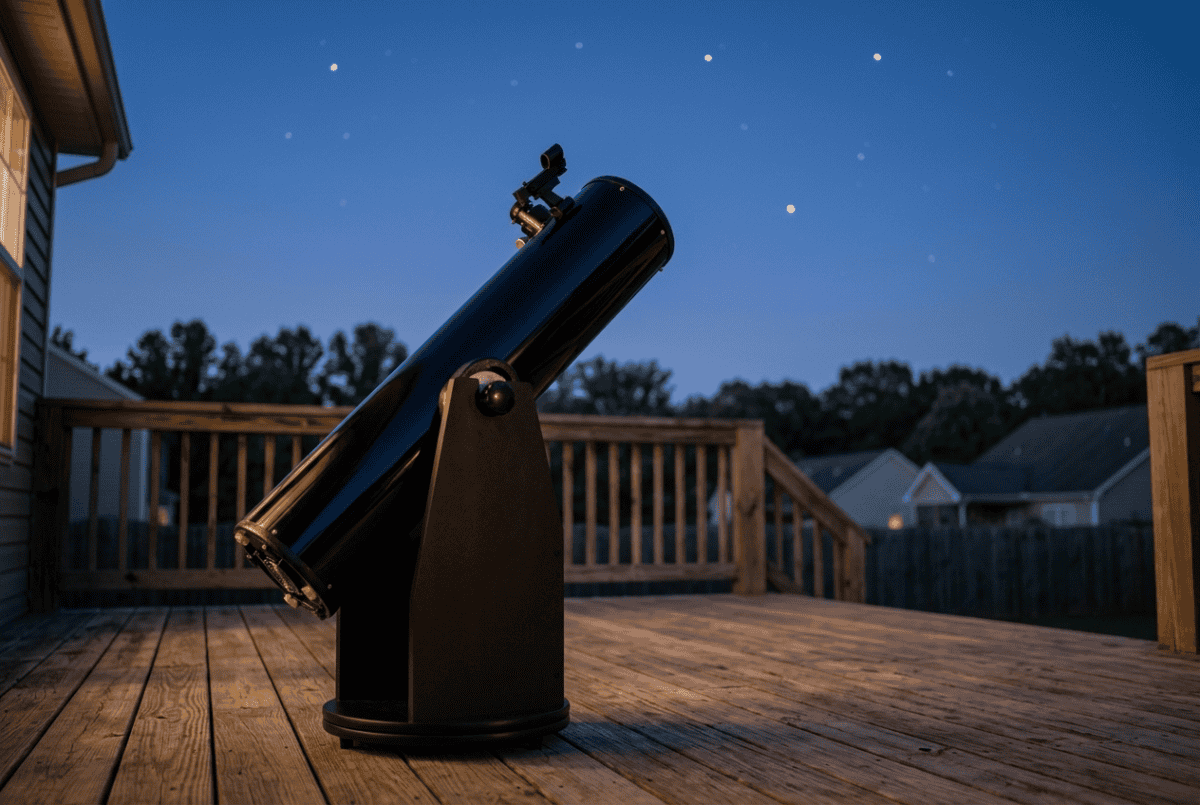
A Dobsonian is a Newtonian reflector telescope mounted on a simple wooden alt-azimuth base called a rocker box. That’s the whole idea — a big, inexpensive mirror sitting on a mount that just swings left-right and tips up-down. By skipping the expensive tripod and equatorial mount, a Dob puts every dollar into aperture, which is why an 8-inch Dobsonian costs a fraction of an 8-inch telescope on any other mount. You point it by hand, nudging it to follow the stars. It’s the design amateur astronomers reach for when they want the most light-gathering power per dollar, and I explain the design fully in what is a Dobsonian telescope.
Best overall: Apertura AD8 (~$725)
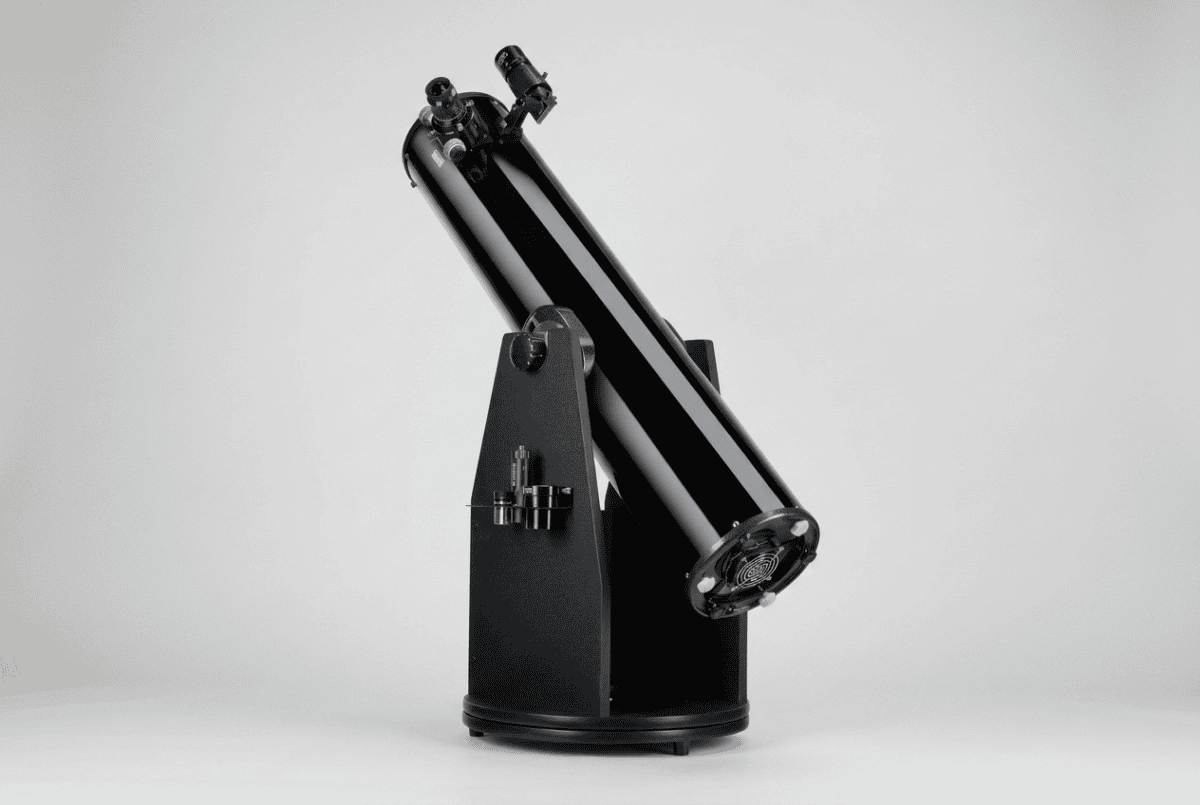
The Apertura AD8 is the best Dobsonian for most people because it gives you a serious 8-inch aperture and the accessories you’d otherwise spend $150–$200 adding. Out of the box you get a 2-inch dual-speed Crayford focuser (a genuine upgrade for fine focusing at high power), a 2-inch 30mm and a 1.25-inch 9mm eyepiece, a laser collimator, a right-angle finder, a cooling fan to bring the mirror to temperature faster, and a moon filter. That bundle is the difference between “cheaper on paper” and “actually ready to observe tonight.”
Optically it’s the same class of instrument that shows the Cassini Division in Saturn’s rings, cloud belts and festoons on Jupiter, and the globular cluster M13 breaking into hundreds of individual stars. The AD8 (and its identical twin, the Zhumell Z8) is the pick experienced observers quietly make while the affiliate roundups keep pushing whatever’s easiest to link. The honest catch is size — an 8-inch Dob is a two-piece armful and wants floor space to store.
- Pros: Big 203mm aperture; excellent included accessories; 2-inch dual-speed focuser; cooling fan and collimator included.
- Cons: Bulky to store and carry; manual pointing; occasional collimation needed.
Best value: Sky-Watcher Classic 200P (~$725)
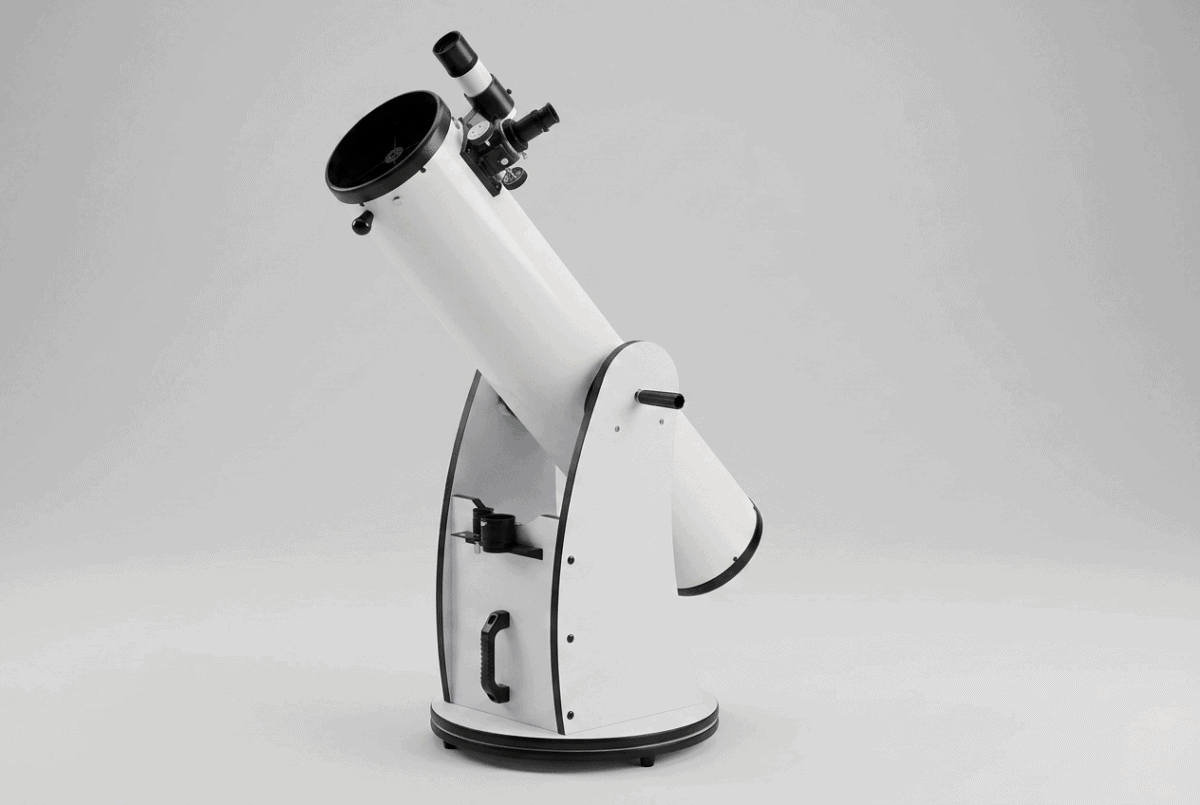
If you want the same 8-inch aperture from the most widely available brand, the Sky-Watcher Classic 200P is the proven choice. It’s the scope that gets recommended over and over as a first serious telescope, and for good reason: solid optics, a stable base, and stock you can actually find when Apertura sells out. It ships with fewer extras than the AD8 — you’ll likely want to add a better focuser accessory and a second eyepiece over time — but the core instrument is excellent and the resale value stays strong.
For the value-minded, the Zhumell Z8 (around $625 when in stock) is essentially the AD8 with the same accessory bundle at a slightly lower price — grab it if you find it available. Whichever 8-inch you choose, it will comfortably outperform any small refractor or tabletop scope on faint objects, and it pairs perfectly with the picks in my best telescopes under $500 guide if you’re stretching the budget.
- Pros: Widely stocked; proven optics; strong resale; the classic “buy once” beginner Dob.
- Cons: Fewer included accessories than the AD8; single-speed focuser.
Best budget and tabletop: Sky-Watcher Heritage 150P (~$355)
For tight budgets or small spaces, the Sky-Watcher Heritage 150P tabletop Dobsonian delivers the most aperture-per-dollar you can grab with one hand. Its 150mm (6-inch) mirror sits in a collapsible tube that stores in a closet and sets up in seconds, making it the ideal grab-and-go scope for renters, balconies, and quick sessions. Step down to the Sky-Watcher Heritage 130P (around $305) if you want to save a little more; I reviewed it in full and it remains my favorite first telescope for small spaces.
Be clear on the trade-off: a tabletop Dob has no tripod, so it must sit on a solid table, stool, or crate at eye height. And a 6-inch, while excellent, shows less than a full-size 8-inch — there’s no free lunch on aperture. But as an affordable, genuinely portable telescope you’ll actually use, it’s hard to beat.
- Pros: Great aperture per dollar; collapsible and closet-storable; fast setup; ideal for small spaces.
- Cons: Needs a table or stool to sit on; shows less than a full-size 8-inch; basic focuser.
Best big aperture: Apertura AD12 (~$1,250)
When you want to see the most, aperture rules, and the 12-inch Apertura AD12 delivers galaxy-hunting light-grasp for a reasonable price. A 305mm mirror pulls in more than twice the light of an 8-inch, turning faint fuzzies into structured objects — spiral arms hinted in the brighter galaxies, detail in nebulae, and star clusters that blaze. It carries the same generous accessory bundle as the AD8. The honest reality is that a 12-inch Dob is big and heavy: it’s a two-person-friendly load, needs real storage, and takes longer to cool down. If you want that aperture in a more portable form, a Sky-Watcher FlexTube 300 collapsible (around $1,750) shortens for transport.
- Pros: Enormous light-gathering; best deep-sky views here; strong accessory package.
- Cons: Large, heavy, needs significant storage; longer cool-down; not a grab-and-go.
Best for finding objects: Celestron StarSense Explorer 8-inch Dob (~$725)
If manually star-hopping to targets sounds daunting — especially under light-polluted skies where few guide stars are visible — the Celestron StarSense Explorer 8-inch Dob solves it with your phone. You dock your phone, the StarSense app reads the star field and plate-solves your position, then arrows guide you to nudge the scope onto any target. It’s the same great 8-inch aperture with a finding aid that dramatically shortens the beginner learning curve. Note that this is manual push-to, not motorized GoTo — you still move the scope by hand, which means no batteries to die and no alignment routine. For a budget motorized option, the Sky-Watcher Virtuoso GTi 150P (around $460) is a tabletop Dob that tracks and slews via app.
- Pros: 8-inch aperture; phone-guided finding works under light pollution; no power needed.
- Cons: Costs more than a plain Dob; you still point by hand; phone must fit the dock.
How to choose: aperture, portability, focuser, and accessories
Choosing a Dobsonian comes down to balancing aperture against what you’ll realistically store and carry. Bigger mirrors show more, but a scope too heavy to haul out gets used less — the best telescope is the one you actually set up. Work through these in order: pick the largest aperture you can comfortably store and move (an 8-inch is the sweet spot for most people); prefer a 2-inch dual-speed focuser if it’s offered; and add up the included accessories, because a bare scope that needs $150 in eyepieces and a collimator isn’t as cheap as its sticker says. If you’re brand new, my best telescope for beginners guide puts Dobs in context against other designs.
What you’ll actually see through each aperture
From experience: the jump to an 8-inch Dob is really about light grasp — that is what finally resolves globular clusters into pinpoints, pulls real structure out of nebulae, and holds the fine planetary detail that smaller scopes only hint at.
Aperture translates directly into what’s visible, so here’s the honest breakdown from real backyard observing rather than marketing:
| Aperture | What it realistically shows |
|---|---|
| 6" (150mm) | Saturn’s rings and Cassini gap on good nights, Jupiter’s belts and moons, lunar detail, M13 starting to resolve, the brighter Messier objects as glowing patches. |
| 8" (203mm) | The sweet spot — sharper planets, M13 resolving into a ball of stars, the Ring Nebula, many galaxies as faint smudges, dozens of clusters and nebulae. |
| 10" (254mm) | Noticeably brighter deep-sky, more galaxies with hints of shape, finer planetary detail on steady nights. |
| 12" (305mm) | Structure in brighter galaxies and nebulae, faint objects that vanish in smaller scopes, the most rewarding deep-sky views here. |
One honest note for suburban observers: light pollution dims galaxies and faint nebulae no matter the aperture, so from Bortle 5–6 skies they’ll look like grey smudges rather than photographs. The Moon, planets, double stars, and bright clusters, though, punch right through — and those never disappoint. See my best telescopes for planets guide for the Solar System side.
The truth about collimation, cool-down, and maintenance
Dobsonians need a little upkeep that affiliate roundups gloss over, but none of it is hard. Collimation — aligning the mirrors — is the main task, and it takes a couple of minutes with a laser collimator (included with the AD8 and AD12). You don’t do it every session; check it occasionally and after transport. The mirror also needs to cool to the outdoor temperature to give its best images, which is why a cooling fan helps — plan 30–45 minutes on a cold night. Beyond that, keep the optics covered when stored, clean the mirror rarely and gently, and that’s essentially it. None of this should scare a beginner off; it’s far simpler than it sounds.
Dobsonian vs refractor, and can you do astrophotography?
For visual observing on a budget, a Dobsonian beats a similarly priced refractor on nearly every count, because you get vastly more aperture for the money. A $700 Dob is an 8-inch; a $700 refractor might be 4 inches. Where refractors win is portability, low maintenance, and wide-field views — but for seeing faint objects, aperture wins. On astrophotography, be clear-eyed: Dobsonians are built for visual use. Their alt-azimuth mounts can’t track the sky for the long exposures deep-sky imaging needs, so a Dob is not a deep-sky astrophotography rig. You can capture the Moon and planets with a phone or a planetary camera, and that’s genuinely fun — but if your goal is imaging nebulae and galaxies, you want a different setup (or a smart telescope). For a Dob, the mission is looking through the eyepiece, and it’s the best value there is for that.
Frequently asked questions
What is the best Dobsonian telescope in 2026?
The 8-inch Apertura AD8 (around $725) is the best overall for its combination of large aperture and premium included accessories. The Sky-Watcher Classic 200P is the most widely available 8-inch equivalent and the safest value pick.
What size Dobsonian should a beginner buy?
An 8-inch (200mm) is the sweet spot — big enough to show galaxies, nebulae, and detailed planets, yet still affordable and manageable. Choose a 6-inch tabletop instead if budget or storage space is tight.
Can you do astrophotography with a Dobsonian?
Dobsonians are designed for visual observing and can capture the Moon and planets with a phone or planetary camera, but their alt-azimuth mounts can’t track long enough for the deep-sky exposures that galaxy and nebula imaging require.
Do Dobsonian telescopes need collimation?
Yes, the mirrors need occasional alignment, but it takes only a couple of minutes with a laser collimator and isn’t required before every session — just check it periodically and after moving the scope.
Is a tabletop Dobsonian worth it?
Yes, for portability and grab-and-go convenience they’re excellent, but you’ll need a sturdy table or stool to set one on and you’ll see noticeably less than a full-size 8-inch scope.
Apertura, Sky-Watcher, Celestron, or Zhumell — which brand is best?
Apertura and Zhumell give the most accessories per dollar, Sky-Watcher offers the widest availability and strong value, and Celestron’s StarSense line is best if you want app-guided object finding. You can’t go wrong with an 8-inch from any of them.
The bottom line
A Dobsonian is the most telescope your money can buy, and for the vast majority of observers an 8-inch is the right one — enough aperture to show galaxies and resolve clusters, still simple enough to set up and enjoy. Get the Apertura AD8 if you want the best-equipped package, the Sky-Watcher Classic 200P if you want the most available proven option, a Heritage 150P if you need budget portability, or the StarSense 8-inch if you want your phone to find objects for you. Whatever you choose, point it at Saturn on the next clear night and you’ll understand why aperture is king. Explore more buying guides here at TelescopeSchool, and clear skies.
>I’m Will Montgomery, an engineer who returned to astronomy at 50 and observes from Bortle 5-6 suburban skies near York, Pennsylvania. I’ve tested Dobsonians of every aperture against real backyard conditions, and an 8-inch Dob is the scope I recommend most.
These May Help Too...
Can You Use a Telescope Through a Window? (And Why You Should Not)
Using a telescope through a window ruins the view: bad glass, heat currents and reflections. Here is what actually happens, and what to do instead.
Telescope will not come to focus? The cause is almost always spacing, not optics. Work out whether you ran out racking in or out, then fix that end.