

Quick answer: For most people the best telescope for planets in 2026 is a long-focal-length compound scope in the 5- to 8-inch range. The Celestron NexStar 6SE (150mm, f/10) is my all-around pick for the sweet spot of aperture, portability, and go-to convenience. If you want the most planet per dollar and don’t mind pushing the tube by hand, an 8-inch Dobsonian like the Apertura AD8 shows more detail for less money.
Last Updated: July 2026 | Will Montgomery holds a B.S. in Engineering from Penn State and came back to amateur astronomy at 50, observing from suburban York, PA (Bortle 5–6). These picks reflect what actually holds up under a real backyard sky.
Why I trust a telescope for planets over almost anything else in a light-polluted sky
I’m Will Montgomery. I’ve got a B.S. in engineering from Penn State and spent my career in manufacturing, where my whole job was deciding whether a machine actually met spec or just claimed to. I came back to amateur astronomy at 50 after a department-store telescope sat in a closet for 25 years, and I observe from a Bortle 5–6 backyard in York, Pennsylvania, where the Milky Way is a rumor and the streetlight two doors down never sleeps.
Here’s the honest truth that took me too long to learn: planets are the light-polluted observer’s best friend. Faint galaxies and nebulae are diffuse smudges that get washed right out by skyglow. Planets are the opposite — small, bright, high-contrast objects whose light punches straight through the orange haze over my neighborhood. Jupiter’s cloud belts look the same from my patio as from a dark site an hour north. That’s a rare gift, and it’s exactly why a planetary scope is the smartest first “real” telescope for anyone stuck under suburban skies.
The engineer in me also likes that planetary performance is largely predictable from a spec sheet. You’re chasing two numbers — long focal length and honest aperture — plus one thing no manufacturer controls: the atmosphere. Get those right and you will not be disappointed. If you’re brand new to all of this, start with my best telescope for beginners guide, then come back when planets are your priority.
What actually makes a telescope good for planets
Good planetary performance comes down to long focal length, real aperture, and a stable mount. Everything else is secondary.
Focal length: the lever that gives you magnification
Magnification is just telescope focal length divided by eyepiece focal length. A scope with a 1500mm focal length and a 10mm eyepiece gives you 150x; a short 650mm beginner scope with that same eyepiece gives only 65x. To reach the 180–220x you want for planets, a long native focal length gets you there with comfortable, forgiving eyepieces instead of tiny, eye-straining short ones. This is why Maksutov-Cassegrains (f/12 and up) and Schmidt-Cassegrains (f/10) dominate planetary recommendations — they pack a long focal length into a short, luggable tube.
Aperture: resolution and brightness
Aperture is the diameter of the main lens or mirror, and it sets how much fine detail the scope resolves and how bright the image is at high power. A 6-inch scope shows more Jovian cloud detail and a cleaner Cassini Division than a 4-inch. More aperture is better for planets — but there’s a ceiling set by the sky itself, which I’ll get to. For most backyard observers the practical range is 5 to 8 inches.
The mount matters more than beginners think
At 200x the view shakes if you breathe on a cheap tripod, and a planet drifts across the eyepiece in under a minute. A solid mount — a motorized go-to fork or a smooth Dobsonian base — is not a luxury at planetary powers; it’s the difference between a steady, detailed image and a jittery mess. It’s also why those $80 “500x!” tripod scopes fail: the optics might be okay, but the mount turns every nudge into an earthquake.
Comparison: best telescopes for planets in 2026
| Telescope | Type | Aperture | Price band | Best for |
|---|---|---|---|---|
| Celestron NexStar 6SE | Schmidt-Cassegrain (go-to) | 150mm (6″) | $1,000–$1,200 | Best all-around planetary pick with go-to convenience |
| Celestron NexStar 8SE | Schmidt-Cassegrain (go-to) | 203mm (8″) | $1,500–$1,700 | Most aperture in a go-to package |
| Sky-Watcher Skymax 127 | Maksutov-Cassegrain (OTA) | 127mm (5″) | $500–$650 (tube only) | High-contrast planetary specialist on a budget |
| Apertura AD8 | Dobsonian reflector | 203mm (8″) | $650–$750 | Most planet per dollar; manual pointing |
| Celestron NexStar 5SE | Schmidt-Cassegrain (go-to) | 125mm (5″) | $850–$1,050 | Grab-and-go go-to for small spaces |
| Celestron Omni XLT 102 | Achromatic refractor (EQ) | 102mm (4″) | $400–$500 | Low-maintenance refractor on a tracking mount |
Prices accurate at time of publication — check current pricing before buying.
My top planetary picks, reviewed
These are the scopes I’d actually hand a friend — with real pros and cons, because no scope here is perfect.
Celestron NexStar 6SE — best all-around planetary telescope
The NexStar 6SE is the one I recommend most often, and it’s the scope I keep coming back to. You get a 150mm (6-inch) Schmidt-Cassegrain with a 1500mm focal length at f/10, sitting on a computerized single-fork go-to mount that will find and track planets for you. The long focal length means planets land at genuinely useful magnifications without exotic eyepieces, and 6 inches of aperture resolves real detail — banding on Jupiter, the Cassini Division in Saturn’s rings, the phases of Venus and Mercury.
What I like: The tube is compact and light enough to carry outside fully assembled. Tracking is a bigger deal than people realize at 180x — the planet stays put while you study it and let your eye relax into the detail, which is when the fine stuff pops out. Go-to also means light pollution doesn’t stop you finding targets, since you’re not star-hopping through a washed-out sky.
What I don’t: It runs on AA batteries that die fast in cold weather — budget for a rechargeable power pack immediately. The single-arm fork is convenient but not rock-solid; nudge it and you’ll wait a second or two for the vibration to settle. And the price has crept into four figures. Check the current price on the Celestron NexStar 6SE.
Celestron NexStar 8SE — most aperture in a go-to package
If your budget stretches and you want the most detail with go-to convenience, the 8SE steps up to a 203mm aperture and a whopping 2032mm focal length. On a night of steady air that extra glass is obvious — more cloud structure on Jupiter, the Great Red Spot showing color rather than just shape, sharper ring detail on Saturn.
What I like: Eight inches is arguably the ceiling of what suburban air can support most nights, so you’re rarely leaving resolution on the table — with the same friendly go-to interface as the 6SE.
What I don’t: The 8-inch tube is noticeably heavier and top-heavy on the same-class single-fork mount, so vibration settling is worse and a wind gust is your enemy. It takes longer to cool to outside temperature before the image sharpens up, and it’s the priciest scope here. Check the current price on the Celestron NexStar 8SE.
Sky-Watcher Skymax 127 — high-contrast planetary specialist on a budget
The Skymax 127 is a 127mm Maksutov-Cassegrain with a 1540mm focal length at f/12.1, purpose-built for exactly this job. Maksutovs have a small central obstruction and deliver famously high-contrast, sharp views of small bright objects, and this tube punches above its aperture on the Moon and planets.
What I like: The contrast is genuinely lovely — crisp lunar craters and clean planetary disks. It’s sold as an optical tube, which keeps the price low and lets you pair it with a mount you already own. It holds collimation essentially forever, so there’s almost no maintenance.
What I don’t: “Tube only” means you must supply a mount, and a wobbly one ruins it — budget for a decent alt-az or EQ and you’re back up in price. That f/12 focal ratio makes for a narrow field of view, so it’s a planetary and lunar specialist, not a deep-sky performer. And like all Maks, it needs a long cool-down. Check the current price on the Sky-Watcher Skymax 127.
Apertura AD8 — most planet per dollar
If you care about detail-per-dollar above all else, an 8-inch Dobsonian wins, and the Apertura AD8 is the one I point people to. You get a 203mm mirror and a 1200mm focal length at f/5.9 on a simple, stable Dobsonian base — for roughly the price of the 5-inch go-to scopes. The same 8 inches of aperture that costs $1,500 in the 8SE costs about half that here because you’re paying for glass, not motors.
What I like: The stability is superb — a Dob base has no wobble to settle, so the high-power view is dead steady. The included accessories are generous, and eight inches of aperture is a serious planetary performer, and my top value pick.
What I don’t: There’s no tracking, so at 200x you’ll be nudging the tube every 30–40 seconds — that takes practice and annoys some people. The shorter f/5.9 focal length means you need shorter eyepieces (and eventually a good 2x Barlow) to reach planetary powers, and it’s a big object to store and carry. If a Dob appeals but the budget’s tighter, see my best telescope under $200 guide. Check the current price on the Apertura AD8.
Celestron NexStar 5SE and Omni XLT 102 — the smaller, lighter options
The NexStar 5SE is the little brother of the 6SE — a 125mm SCT with a 1250mm focal length and the same go-to fork. It’s a real grab-and-go for apartments and small patios and still shows Saturn’s rings and Jupiter’s belts. You give up some resolution to the 6SE, so for the small price difference I usually tell people to stretch for the 6. Check the current price on the Celestron NexStar 5SE.
The Omni XLT 102 is a 102mm achromatic refractor at f/9.8 on a German equatorial mount. Refractors are low-maintenance and never need collimation, and the long focal ratio keeps false color in check. It’s a fine, honest planetary starter — just know a 4-inch achromat shows a little purple fringing on the brightest objects and resolves less than the bigger scopes. Check the current price on the Celestron Omni XLT 102.
How much magnification can you actually use? Atmospheric seeing and the 50x rule
From experience: Some of my best planetary nights haven’t come from expensive glass. My most memorable view was from a dark-sky spot here in Pennsylvania on a dry, low-humidity night — a little wind, but the seeing snapped into focus — through an Astronomers Without Borders 130mm tabletop Dob. The grandkids were thrilled, and honestly, so was I.
The realistic ceiling for planetary magnification on most nights is about 200–250x, and it’s set by the atmosphere, not your telescope. This is the most important expectation to get right, because every box promising “525x!” is selling you a number the sky will never let you use.
There’s a rule of thumb called the 50x rule: the maximum useful magnification is roughly 50x per inch of aperture, so a 6-inch scope tops out around 300x and an 8-inch around 400x — in theory. I break down where that number comes from and where it fails in my guide to the 50x rule and magnification limits, worth reading before you buy any eyepieces.
Here’s the catch the rule doesn’t mention: atmospheric seeing. The air above you is always moving, and that turbulence blurs and boils the image at high power. On a typical night in York, even with a perfect 8-inch scope, I rarely get a usable image past about 220–250x — beyond that the planet just turns to mush no matter how good the optics are. The scope’s theoretical limit almost never matters; the sky’s limit does. If you’re new to high power and nothing looks sharp, my troubleshooting guide for when you can’t see anything through your telescope walks through the usual culprits.
What each planet actually looks like through these scopes
Set expectations now and you’ll be thrilled instead of let down: planets are small, bright, and detailed, but they are not the Hubble posters. Here’s the honest view through a 5- to 8-inch scope at 150–220x.
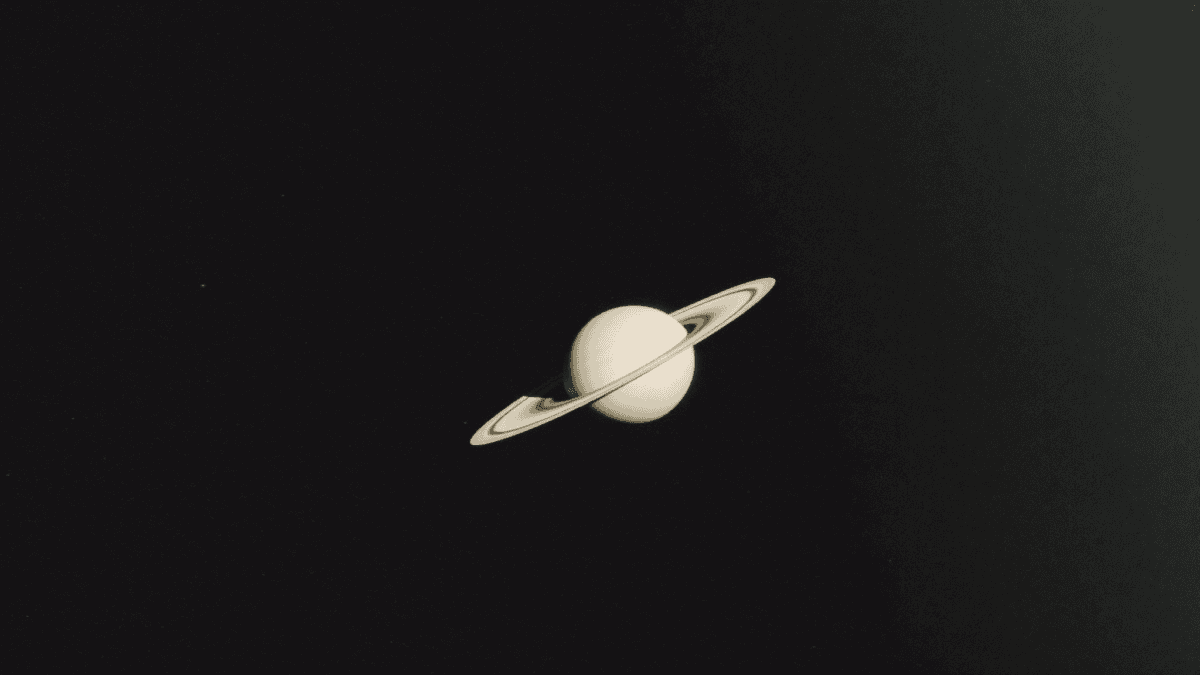
- Saturn is the showstopper that makes people gasp out loud. The rings are unmistakable, the Cassini Division (the dark gap in the rings) shows on steady nights, and you’ll see the tan disk of the planet itself — a tiny, sharp, three-dimensional jewel. My full walkthrough: how to see Saturn’s rings through a telescope.
- Jupiter is bright and shows two to four dark cloud belts across a cream-colored disk, plus its four Galilean moons strung out like beads on a line — their positions change night to night. On good nights the Great Red Spot rotates into view. It’s the most detail-rich planet in a small scope.
- Mars is a small orange disk except near opposition (every ~26 months), when steady air and 8 inches of aperture can reveal a polar ice cap and dark surface markings. Away from opposition, it’s a featureless dot — don’t expect much.
- Venus shows no surface detail (it’s cloud-covered), but you’ll clearly see it go through phases like a tiny moon — crescent, half, and gibbous — a thrill the first time.
- Mercury, Uranus, and Neptune are catchable but show little: Mercury is a small phase low in twilight, while Uranus and Neptune are tiny blue-green dots with no visible surface detail in amateur scopes.
The Moon, by the way, is spectacular in every scope on this list and never gets old — crater walls, mountain ranges, and shadow detail along the terminator that changes every single night.
So which planetary telescope should you buy?
Buy the NexStar 6SE if you value go-to tracking; buy the Apertura AD8 if you want maximum detail for the money and don’t mind nudging the tube by hand. Those two cover most buyers. Go with the Skymax 127 if you already own a decent mount and want a high-contrast specialist on a budget, step up to the 8SE for the most aperture with go-to, or pick the 5SE or Omni XLT 102 if portability trumps everything. Whatever you choose, you’re getting real planetary performance — and because planets shine right through light pollution, you’ll get your money’s worth even from a Bortle 6 backyard like mine.
Frequently asked questions
What is the best telescope for viewing planets in 2026?
For most people it’s the Celestron NexStar 6SE — a 6-inch Schmidt-Cassegrain with long focal length and go-to tracking that shows Saturn’s rings and Jupiter’s belts with ease. If you want more detail per dollar and don’t need tracking, an 8-inch Dobsonian like the Apertura AD8 shows more for about half the price. Both are excellent; the choice comes down to convenience versus value.
How much magnification do I need to see planets clearly?
Most planetary detail shows up between 150x and 220x, and the atmosphere rarely allows more than about 250x on a typical night regardless of your telescope. Chasing higher numbers just gives you a bigger, blurrier planet. A long-focal-length scope reaches these useful magnifications comfortably with standard eyepieces.
Can I see planets from a light-polluted city or suburb?
Yes — planets are actually one of the best targets for light-polluted skies because they’re small, bright, high-contrast objects whose light cuts right through skyglow. I observe planets from a Bortle 5–6 backyard and the views rival what I’d get at a dark site. Light pollution mainly hurts faint deep-sky objects, not planets.
Is a refractor or a Cassegrain better for planets?
Both work well, but for the money a compound scope (Schmidt- or Maksutov-Cassegrain) usually gives you more aperture and focal length in a compact tube, which is exactly what planets reward. A quality apochromatic refractor is superb on planets but costs far more for the same aperture, while a budget achromat like the Omni XLT 102 is a fine, low-maintenance option if you prefer that design.
Why do planets look so small even at high magnification?
Planets are genuinely tiny in angular size, so even at 200x Saturn appears as a small, sharp jewel rather than a full-screen image. That’s normal — the detail is in studying that crisp disk, not in making it huge. Atmospheric turbulence limits how much you can enlarge the view before it degrades, so a smaller sharp image beats a big blurry one every time.
Planets are a favorite target from my light-polluted backyard, so I know which scopes actually deliver on Jupiter, Saturn, and Mars.
These May Help Too...
Can You Use a Telescope Through a Window? (And Why You Should Not)
Using a telescope through a window ruins the view: bad glass, heat currents and reflections. Here is what actually happens, and what to do instead.
Telescope will not come to focus? The cause is almost always spacing, not optics. Work out whether you ran out racking in or out, then fix that end.