

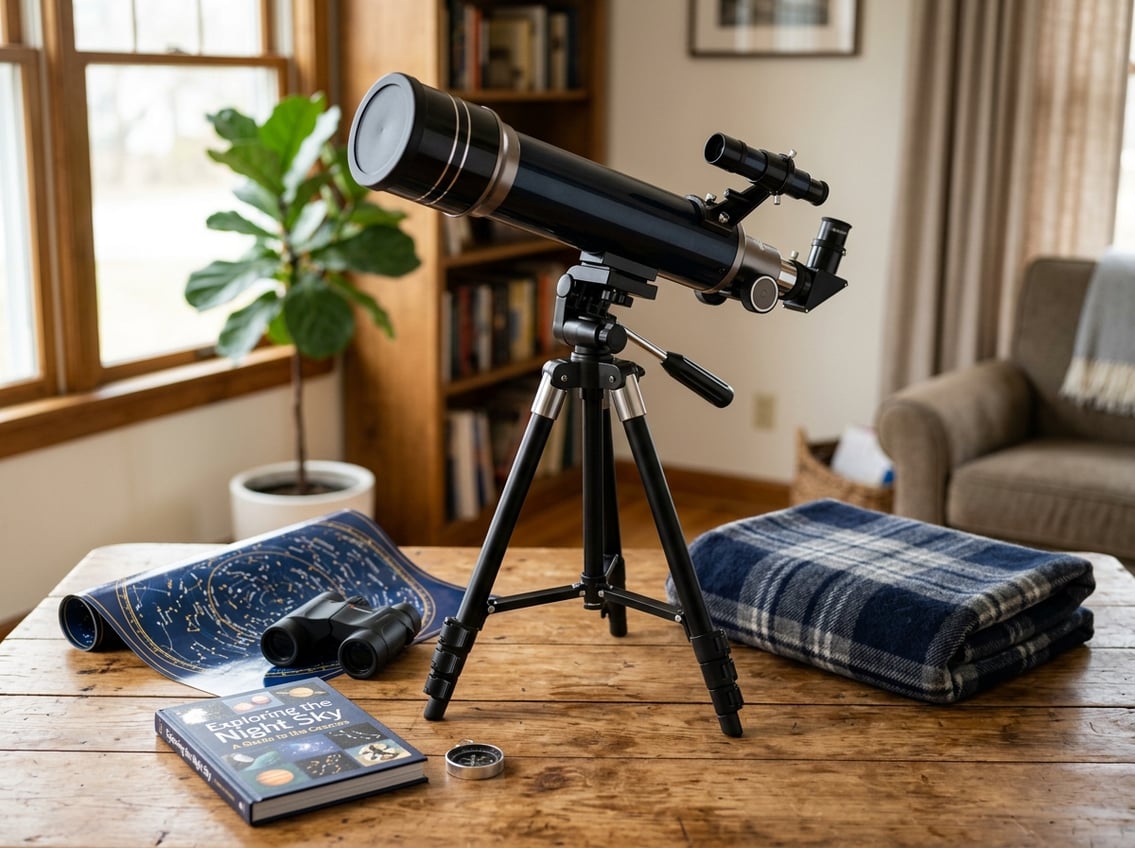
Buying a telescope for someone can feel overwhelming when you’re facing dozens of models with different specs and price points. You want to pick something that will actually get used instead of ending up in a closet after one frustrating night of trying to figure it out.
The best telescope gift depends on the recipient’s experience level, available space, and what they want to observe in the night sky. A beginner needs something different from an experienced stargazer, and someone in an apartment has different requirements than someone with a large backyard. Most beginner telescopes end up unused within three months, so choosing the right match matters.
This guide covers ten telescope options across different types and budgets. You’ll also learn what factors to consider before making your purchase and how to help your gift recipient get the most from their new telescope.
Last Updated: May 2026 | Will Montgomery is an amateur astronomer who has gifted and recommended telescopes to family members and knows exactly what makes a scope easy to fall in love with.
1) Celestron NexStar 8SE Telescope
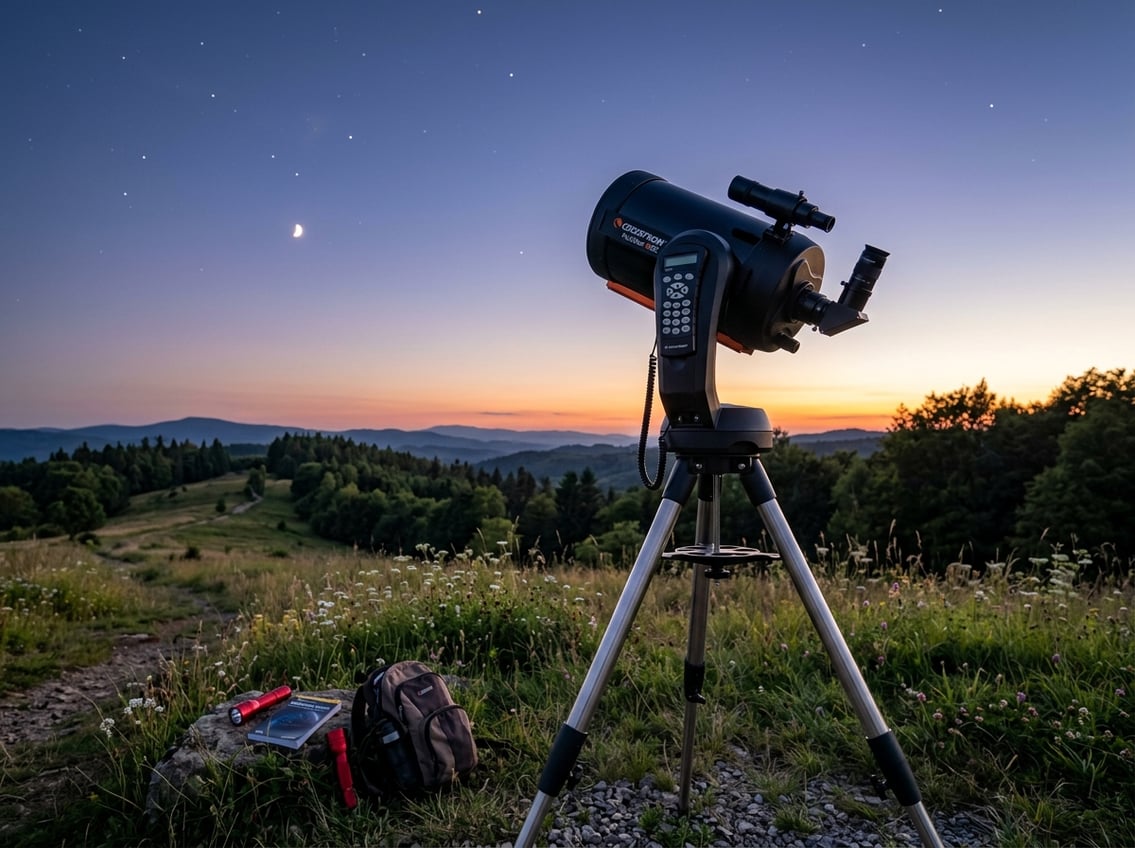
The Celestron NexStar 8SE combines advanced features with excellent optics in an easy-to-use system. This makes it a standout gift for anyone serious about astronomy.
You get an 8-inch Schmidt-Cassegrain optical system that delivers clear views of planets and deep-sky objects. The computerized GoTo mount automatically finds and tracks over 40,000 celestial objects with push-button alignment.
The telescope’s compact design fits the performance of a much larger scope into a portable package. At only 17 inches long, it fits easily in your car’s back seat while maintaining a 2032mm focal length.
Your gift recipient will appreciate how the intuitive GoTo system allows automatic location and tracking of thousands of celestial objects. This feature eliminates the frustration of manually searching the night sky.
The NexStar 8SE represents one of the best-selling telescope packages of all time for good reason. It offers serious aperture and computerized convenience in a single package that works well for both beginners and experienced observers.
2) Sky-Watcher Evostar 90 AZ Refractor
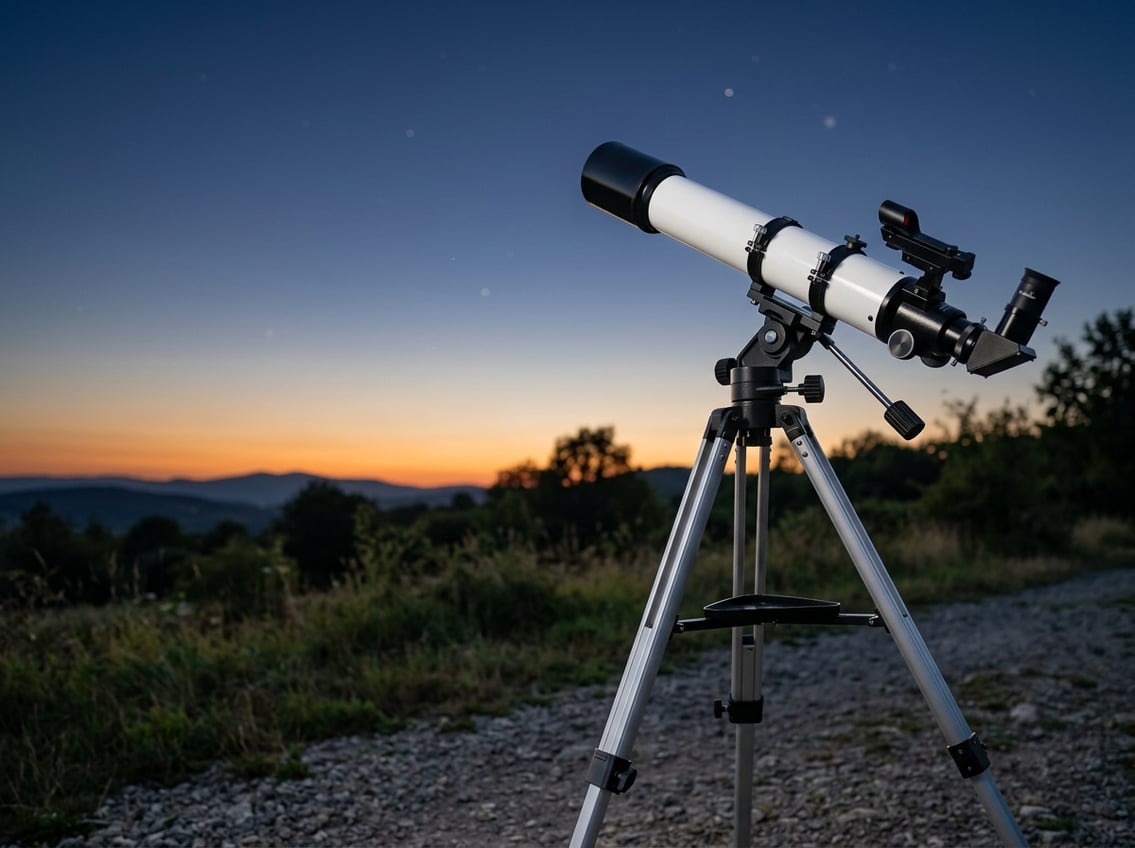
The Sky-Watcher Evostar-90 AZ3 Refractor Telescope makes an excellent gift for someone starting their astronomy journey. This telescope features a 90mm aperture that provides 27% more light-gathering power than 80mm models and 65% more than 70mm versions.
You’ll appreciate the 900mm focal length with an f/10 focal ratio. The two-element, air-spaced, multi-coated objective lens (Update, September 2026: no longer available — current alternative: Celestron Inspire 100AZ (~$330).) delivers sharp, high-contrast views while minimizing chromatic aberration.
This telescope excels at viewing the Moon’s craters, Saturn’s rings, and Jupiter’s cloud bands. It also works well for terrestrial viewing during the day.
The stable AZ3 alt-azimuth mount lets you smoothly track objects across the sky. Your gift recipient can set it up quickly without complicated alignment procedures. The mount’s simple up-down and left-right controls make it easy for beginners to find and follow celestial objects.
The Evostar-90 is built to high optical and mechanical standards, making it a reliable choice that will last for years. This combination of quality optics and user-friendly design makes it a thoughtful gift for aspiring astronomers.
3) Meade Instruments Infinity 102 AZ Refractor
The Meade Infinity 102mm AZ Refractor has the largest aperture in Meade’s Infinity line. This makes it a strong choice if you want to give someone their first serious telescope.
The 102mm aperture delivers bright, detailed views of the night sky. You can observe planets, the moon, and even some deep-sky objects with this scope.
The telescope comes with multiple eyepieces and all necessary accessories to start viewing right away. This means the person receiving it won’t need to buy extra equipment immediately.
The altazimuth mount is lightweight and comes fully assembled. It features slow-motion controls that help track objects as they move across the sky. The aluminum construction with stainless steel legs provides stability without being too heavy.
This telescope works well for viewing both land and celestial objects (Update, September 2026: no longer available — current alternative: Celestron Inspire 100AZ (~$330).). It’s suitable for beginners who are ready to spend a bit more on quality equipment.
4) Orion SkyQuest XT8 Dobsonian
The Orion SkyQuest XT8 Classic Dobsonian stands out as an excellent telescope gift for serious beginners and experienced observers alike. Its 8-inch parabolic primary mirror collects 78% more light than a 6-inch reflector, giving you brighter views of planets, nebulae, and galaxies.
This telescope delivers maximum aperture without a steep price tag. You get a 1200mm focal length and straightforward mechanics that make setup simple.
The Dobsonian design pairs a Newtonian reflector with an easy-to-use rocker box mount. This means your gift recipient can start observing right away without complicated alignment procedures.
Orion’s XT telescope range includes models from 4.5 inches to 16 inches, with the XT8 sitting in the middle. It’s widely considered the best balance of power and practicality in the lineup.
The telescope kit typically comes with useful accessories to enhance stargazing sessions. Your recipient will be able to view far-away galaxies and detailed lunar features with this powerful instrument. The XT8 offers exceptional value for its price point and performance capabilities.
5) Celestron AstroFi 102 Wi‑Fi Telescope
The Celestron AstroFi 102 stands out as a smart gift choice for anyone interested in astronomy. This telescope uses your smartphone or tablet to control where it points, making it simple to find objects in the night sky.
The telescope features a 102mm Maksutov-Cassegrain design with fully coated optics. You’ll get clear views of the Moon’s craters, Saturn’s rings, and Jupiter’s Great Red Spot. The AstroFi 102 weighs just 14 pounds, so you can easily move it to different viewing spots.
The Wi-Fi technology lets you generate sky tours based on your exact time and location. This feature helps beginners learn what’s visible on any given night.
You connect to the telescope through a free app on your mobile device. No internet connection is needed since the telescope creates its own Wi-Fi network. This setup works well for backyard observing or trips to darker skies away from city lights.
6) Zhumell Z12 Deluxe Dobsonian
The Zhumell Z12 Deluxe Dobsonian makes an impressive gift for serious stargazers. This telescope features a 12-inch parabolic primary mirror that gathers significant amounts of light for bright, clear views.
You’ll appreciate that this telescope was designed based on customer feedback from amateur astronomers. It comes with two eyepieces: a 2-inch 30mm for wide field views and a 1.25-inch 9mm for closer observations.
The Dobsonian mount design makes this telescope simple to use. You can easily move it to track objects across the night sky without complicated setups or motors.
Keep in mind that the Z12’s size and weight make it best suited for someone with space to store it. This isn’t a grab-and-go telescope. However, the stunning views it provides make up for its bulk.
The telescope produces images free of spherical aberration thanks to its quality parabolic mirror. Your gift recipient will be able to see lunar craters, planets, and distant galaxies with remarkable detail.
7) Vixen VMC200L Maksutov-Cassegrain
The Vixen VMC200L Maksutov-Cassegrain telescope offers a compact design that makes it a practical gift for serious astronomy fans. This telescope has a 200mm aperture and a focal length of 1950mm at f/9.8.
The design places the corrector lens in front of the secondary mirror instead of at the front of the telescope. This setup means you won’t deal with dew forming on the front element as quickly during humid nights. The open lens barrel design keeps the weight down while maintaining good performance.
You can use this telescope to view planets, the moon, and distant galaxies with good detail. The long focal length works well for observing individual lunar craters and planetary features.
The package includes a 7×50 viewfinder, flip mirror, and carry handle. The spherical primary mirror and meniscus corrector produce sharp focus in the center of the field of view. This telescope suits someone who wants a capable instrument for detailed planetary and lunar observation.
8) Unistellar eVscope eQuinox (compact smart scope)
The Unistellar eVscope eQuinox is a 114mm aperture smart telescope that removes the complexity from deep-sky viewing. You don’t need years of experience to use it effectively.
The telescope features autonomous field detection that aligns itself automatically in under a minute. This means you spend your time observing instead of struggling with setup. You control everything through your smartphone, making the experience straightforward.
The eQuinox uses a Sony IMX224 CMOS image sensor instead of a traditional eyepiece. This design helps the telescope work well under light-polluted skies, which is useful if you live in or near a city.
The telescope is portable and connected, letting you explore deep space objects that would normally require much larger equipment. Part of Unistellar’s Expert Range, it does require collimating, which is a manual adjustment you’ll need to perform occasionally.
For someone interested in astronomy but intimidated by traditional telescopes, this makes an excellent gift. The learning curve is gentle, and the technology handles most of the technical challenges for you.
9) Celestron Inspire 100AZ Refractor (with tripod & starry night bundle)
The Celestron Inspire 100AZ is a 100mm refractor telescope that works well for both land and sky viewing. It has a focal length of 660mm and comes with everything you need to start observing right away.
This telescope includes a smartphone adapter built into the lens cap. You can attach your phone and take pictures of the Moon and planets without buying extra equipment.
The package comes with two eyepieces (10mm and 20mm), a StarPointer finderscope, and an adjustable tripod. You also get an erecting prism for viewing objects on land. The manual alt-azimuth mount lets you move the telescope up and down or side to side easily.
The 100mm aperture makes it suitable for viewing planets, the Moon, star clusters, and bright deep sky objects like the Orion Nebula and Andromeda Galaxy. This telescope is designed for beginners who want a complete setup without complicated assembly or alignment.
10) Explore Scientific ED127 Apo Refractor
The Explore Scientific ED127 Essential Series Air-Spaced Triplet Refractor makes an outstanding gift for serious astronomy enthusiasts. This telescope features a 127mm aperture with a focal length of 952mm at f/7.5.
You get genuine HOYA FCD1 ED glass in an air-spaced triplet design. This setup delivers sharp, high-contrast images with minimal chromatic aberration.
The telescope works well for both visual observation and astrophotography. Its precision-engineered front cell includes push-pull adjustments for collimation, helping you achieve the tightest star images possible.
This premium refractor comes with enhanced multi-layer coatings that improve light transmission and contrast. The white aluminum tube with black accents looks professional on any mount.
The ED127 is designed for advanced users who appreciate quality optics. While it represents a significant investment, the telescope provides excellent performance at the eyepiece and serviceable results for imaging. Your gift recipient will appreciate the diffraction-limited optics that meet or exceed .25PV standards.
What to Consider Before Choosing a Telescope Present
The right telescope depends on who will use it and where they’ll keep it. You need to match the equipment to their experience level and living situation while checking for quality optics and useful extras.
Skill Level and Age of Recipient
Beginners need simple setups that work right out of the box. Most beginner telescopes end up in closets within three months when they’re too complicated to use. Look for models with quick assembly and easy pointing systems.
Children under 10 do best with smaller refractor telescopes. These have fewer parts and require less maintenance. Teens and adults new to astronomy benefit from Dobsonian telescopes that offer good views without complex controls.
Experienced stargazers want different features. They might appreciate computerized mounts or larger apertures for deep-sky viewing. If the recipient already owns astronomy equipment, consider what gaps exist in their current setup before buying.
Space and Storage Requirements
You must think about where the telescope will live when not in use. A 10-inch Dobsonian stands over 4 feet tall and weighs 50 pounds. That won’t fit in a small apartment closet.
Tabletop telescopes work for limited spaces. These sit on desks or tables and store in standard closets. They typically measure 20 inches long and weigh under 15 pounds.
Transportation matters too. Does the recipient have a car to reach dark sky sites? Will they carry the telescope up stairs? Collapsible tube designs break down into smaller pieces for easier transport. Some models fit in backpacks while others need wheeled carts.
Optical Quality and Performance
Aperture size determines what you can see. Larger apertures gather more light and show fainter objects. A 6-inch aperture reveals Jupiter’s cloud bands and Saturn’s rings clearly. An 8-inch or larger aperture brings out details in nebulae and galaxies.
The optical quality affects image sharpness. Cheap lenses produce blurry or distorted views even with good aperture sizes. Look for fully multi-coated optics that reduce glare and increase contrast.
Mount stability prevents frustration. A wobbly mount makes objects bounce around in the eyepiece. Understanding telescope types and their mounts helps you pick stable options. Equatorial mounts track objects as Earth rotates. Alt-azimuth mounts move up-down and left-right with simpler controls.
Accessories and Additional Features
Most telescopes need extra eyepieces for different magnifications. A 25mm eyepiece gives wide views for finding objects. A 10mm eyepiece zooms in on planetary details. Quality eyepieces cost $50-$150 each but last for decades.
Red dot finders help locate objects in the sky. They project a red dot onto the view so you can aim the telescope accurately. Some models include smartphone adapters for basic astrophotography.
Smart telescopes automate the finding process. These connect to apps that identify and locate thousands of objects automatically. They cost more but eliminate the learning curve of star hopping and manual tracking.
Consider maintenance requirements too. Reflector telescopes need mirror cleaning and alignment every few months. Refractors require almost no maintenance beyond occasional lens cleaning.
Making the Most of a Stargazing Gift
Getting a telescope up and running requires some basic setup skills, regular cleaning habits, and connections to local astronomy groups that can speed up your learning curve.
How to Get Started with Astronomy
Start by assembling your telescope in daylight so you can see all the parts clearly. Practice adjusting the finder scope and focusing on distant objects like trees or buildings before attempting to view stars.
Learn the difference between magnification and aperture. A bigger aperture lets in more light and shows fainter objects. High magnification without enough aperture just makes blurry images bigger.
Download a free star chart app on your phone to help identify constellations and planets. Apps like Stellarium or SkySafari point you toward visible objects in real time. Begin with easy targets like the Moon, then move to bright planets like Jupiter or Saturn.
Give your eyes 20-30 minutes to adjust to darkness before expecting to see faint objects. Avoid looking at your phone or any white lights during this time. Use a red flashlight to read star charts without ruining your night vision.
Care and Maintenance Tips
Store your telescope in a dry location at room temperature. Sudden temperature changes create condensation on mirrors and lenses that can damage coatings over time.
Clean optics only when absolutely necessary using proper lens cleaning solution and microfiber cloths. Dust on mirrors affects images less than you think, but fingerprints and smudges cause real problems.
Basic maintenance schedule:
- Check collimation (mirror alignment) monthly for reflector telescopes
- Clean eyepieces every 3-6 months
- Cover the tube when not in use
- Tighten loose screws before each session
Never use household glass cleaners or paper towels on telescope optics. These products contain chemicals and rough fibers that scratch delicate coatings.
Finding Local Stargazing Events
Astronomy clubs organize regular star parties where experienced members help beginners learn their equipment. These events happen at dark-sky locations away from city lights.
Search for astronomy clubs in your area through the Astronomical League or local planetariums. Most clubs welcome visitors to attend one or two meetings before joining. You’ll get hands-on advice about your specific telescope model.
Public observatories often host free viewing nights where you can compare your telescope’s views with larger instruments. Staff astronomers answer questions and suggest optimal settings for different objects.
Check social media groups dedicated to astronomy in your region. Members post about meteor showers, planetary alignments, and impromptu viewing sessions when conditions look promising.
I’ve guided family through buying their first scopes, so I match gift telescopes to the recipient with an engineer’s eye for what gets used.
These May Help Too...
Can You Use a Telescope Through a Window? (And Why You Should Not)
Using a telescope through a window ruins the view: bad glass, heat currents and reflections. Here is what actually happens, and what to do instead.
Telescope will not come to focus? The cause is almost always spacing, not optics. Work out whether you ran out racking in or out, then fix that end.