

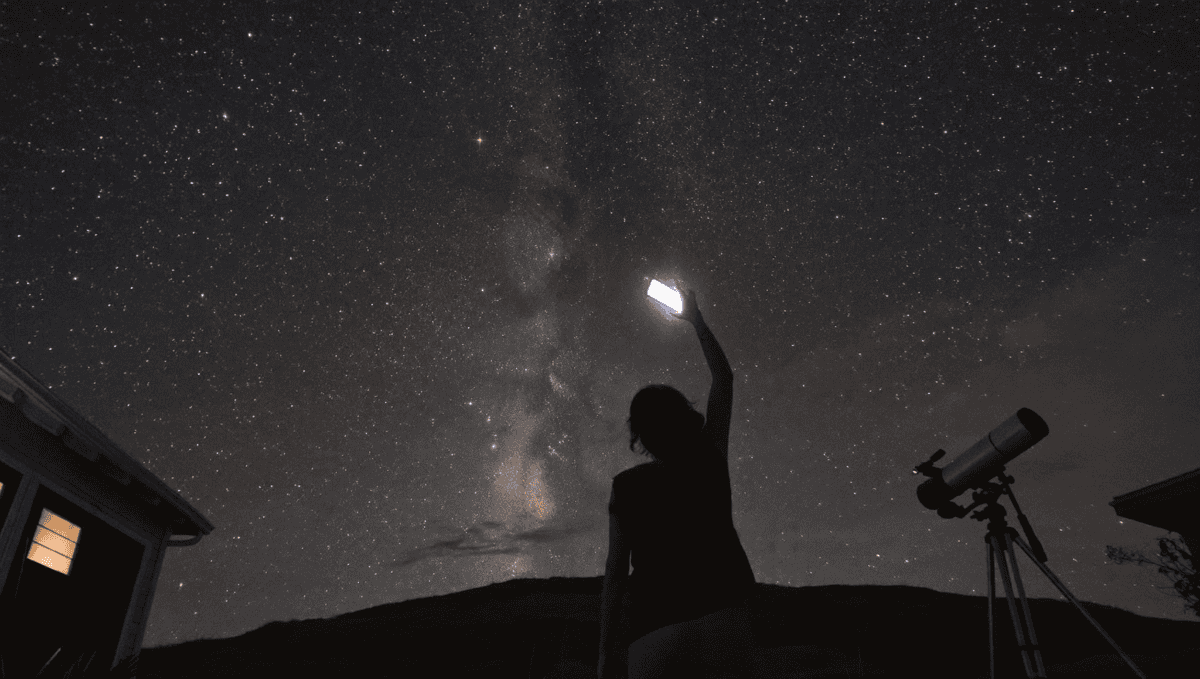
Quick answer: A smart telescope is an all-in-one, app-controlled robotic imager that finds a target, tracks it, and live-stacks a color photo of it on your phone — no eyepiece, no star charts, no fiddling with alignment. If you want the single best one for most people in 2026, buy the ZWO Seestar S50 Pro: it is the most polished, most automated, most beginner-proof scope at a price that does not make you wince.
I am Will Montgomery. I trained as an engineer (B.S. Engineering, Penn State), spent a career in manufacturing, and came back to astronomy at 50 — this time observing from York, Pennsylvania, under Bortle 5–6 suburban skies. If you have ever pointed a traditional telescope at a fuzzy gray smudge from a light-polluted backyard and thought “that’s it?”, you already understand why smart telescopes matter. They are the single biggest reason a city observer can now pull real color out of a nebula that the eye simply cannot see from the suburbs. Below is my systematic, honest ranking — including the things these scopes are genuinely bad at.
Smart telescope comparison table (2026)
| Smart telescope | Aperture / optics | Sensor | Best for | Approx price |
|---|---|---|---|---|
| ZWO Seestar S50 Pro | 50mm, 250mm f/5 refractor | Sony IMX462 (~2MP) | Best overall / beginners | ~$899 (new model) |
| ZWO Seestar S30 Pro | 30mm, 150mm f/5 refractor | Sony IMX662 (~2MP) | Best budget | ~$699 |
| DWARF 3 | 35mm, 150mm refractor (wide-field) | Sony IMX678 (~8MP) | Best wide-field deep-sky | ~$549 |
| Unistellar eQuinox 2 | 114mm, 450mm f/4 reflector | Sony IMX347 (~6MP) | Best premium city deep-sky | ~$2,899 |
| Vaonis Vespera II | 50mm, 250mm f/5 apo | Sony IMX585 (~8MP) | Best design / image polish | ~$1,590 |
Prices move constantly — smart telescopes go on sale around Prime Day, Black Friday, and new-model launches — so every price here was checked on the retailer’s own page in September 2026, but confirm the live number before you buy.
What is a smart telescope?
A smart telescope is a fully automated, app-controlled telescope that captures images of the night sky instead of letting you look through an eyepiece. You place it outside, tap a target in the app, and the scope levels itself, plate-solves against the star field to figure out exactly where it is pointing, slews to the object, and then begins live stacking — combining many short exposures in real time to build up a brighter, cleaner, color image right on your phone or tablet.
The key mental shift: this is not a visual instrument, it is an imaging robot. There is no eyepiece on most of them. What you “see” is a photograph forming on a screen over seconds and minutes. That sounds like a downgrade until the first time a bright pink Orion Nebula materializes on your phone from a driveway where your eyes could only ever see three gray stars. For deep-sky objects — nebulae, galaxies, star clusters — that live-stacked color image blows past what any similarly priced traditional scope shows the human eye, especially under light pollution.
ZWO Seestar S50 Pro — Best overall (and best for beginners)
Model update — September 2026
The original Seestar S50 has been discontinued. ZWO has replaced it with the Seestar S50 Pro, which carries the same 50mm aperture with an upgraded sensor and autofocus, at an introductory $899 (list $999). It is newly released and not yet showing as shipped stock at every retailer — High Point Scientific is taking orders, and B&H has it listed as coming soon. We will update this page the moment it is confirmed in stock, so check back if you are waiting on one. Everything written below about how the S50 performs still applies — the Pro is the same instrument, refined.
➤ Check today’s price: ZWO Seestar S50 Pro at High Point Scientific
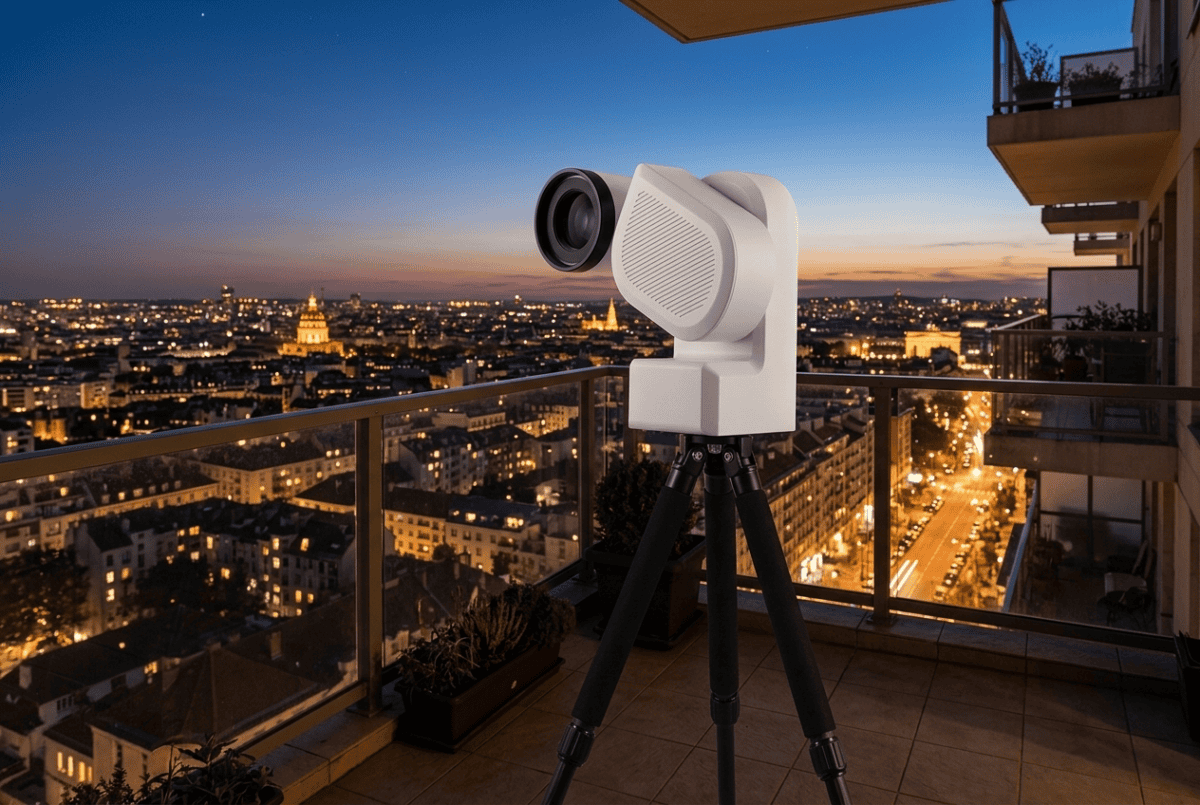
Verdict: The Seestar S50 is the smart telescope I recommend to almost everyone, because it does the most for the least friction of anything in the category.
The S50 is a 50mm f/5 refractor with a built-in tripod, dual-band light-pollution filter, and one of the most refined apps in the category. Set it on the ground, hit a target, and it does the rest. In practice that means a beginner can be looking at a color galaxy within about five minutes of opening the box, with essentially zero astronomy knowledge required. Its slightly longer focal length also gives it a real advantage on the Moon and brighter objects — lunar detail on the S50 is genuinely impressive for the price, and it handles the Sun (with the included solar film cap) too.
Pros:
- Fastest, most idiot-proof setup of any scope here — the automation just works.
- Tripod included in the box (the DWARF 3 and most premium scopes do not).
- Excellent Moon and bright-object detail thanks to the longer 250mm focal length.
- Dual-band filter cuts suburban light pollution effectively.
- Huge, active user community — help is one search away.
Cons:
- Narrower field of view than the DWARF 3 — big targets like the Andromeda Galaxy or the North America Nebula can spill outside the frame (mosaic mode helps, but it is slower).
- The ~2MP sensor is modest by 2026 standards; crop in and images soften.
- Like all of these, it is poor at planets.
Who it’s for: First-time buyers, gift-givers, and anyone who wants the highest chance of a happy, low-frustration night on night one. If you are not sure which to buy, this is the answer.
ZWO Seestar S30 Pro — Best budget
Model update — September 2026
The original S30 has also been discontinued. The current model is the Seestar S30 Pro at $699, in stock now at both Amazon and B&H. It is the cheapest new Seestar you can actually buy today.
➤ Check today’s price: ZWO Seestar S30 Pro on Amazon
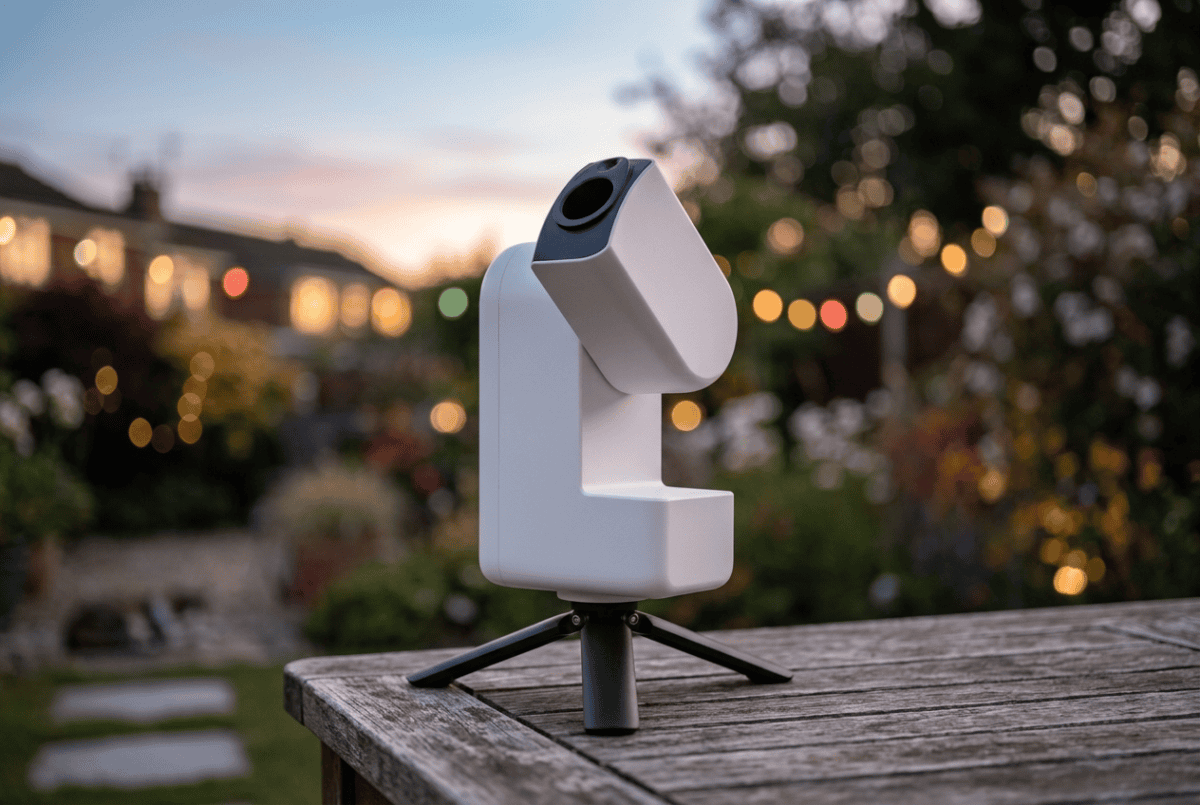
Verdict: At ~$299, the Seestar S30 is the cheapest way to get a genuinely good smart telescope, and it gives up less than the price cut suggests.
The S30 is the S50’s smaller sibling: a 30mm, 150mm refractor that shares the same excellent app and automation. Because it is shorter and wider than the S50, it actually frames large nebulae better while costing $200 less. The tradeoff is the smaller aperture gathers less light, so faint targets need more integration time and images are a touch noisier. There is also an S30 “Pro” variant around $349 with upgrades for buyers who want a little more headroom.
Pros:
- The lowest price of entry into a legitimately capable smart scope.
- Same polished Seestar app and automation as the S50.
- Wider field than the S50 — better for large nebulae.
- Extremely light and packable.
Cons:
- Smaller 30mm aperture means longer exposures and slightly noisier results on faint objects.
- Less lunar detail than the S50.
- Still poor at planets.
Who it’s for: Budget-conscious beginners, travelers, and anyone testing the waters who does not want to spend $500 to find out if this hobby sticks.
DWARF 3 — Best wide-field deep-sky
➤ Check today’s price: DWARFLAB DWARF 3 on Amazon
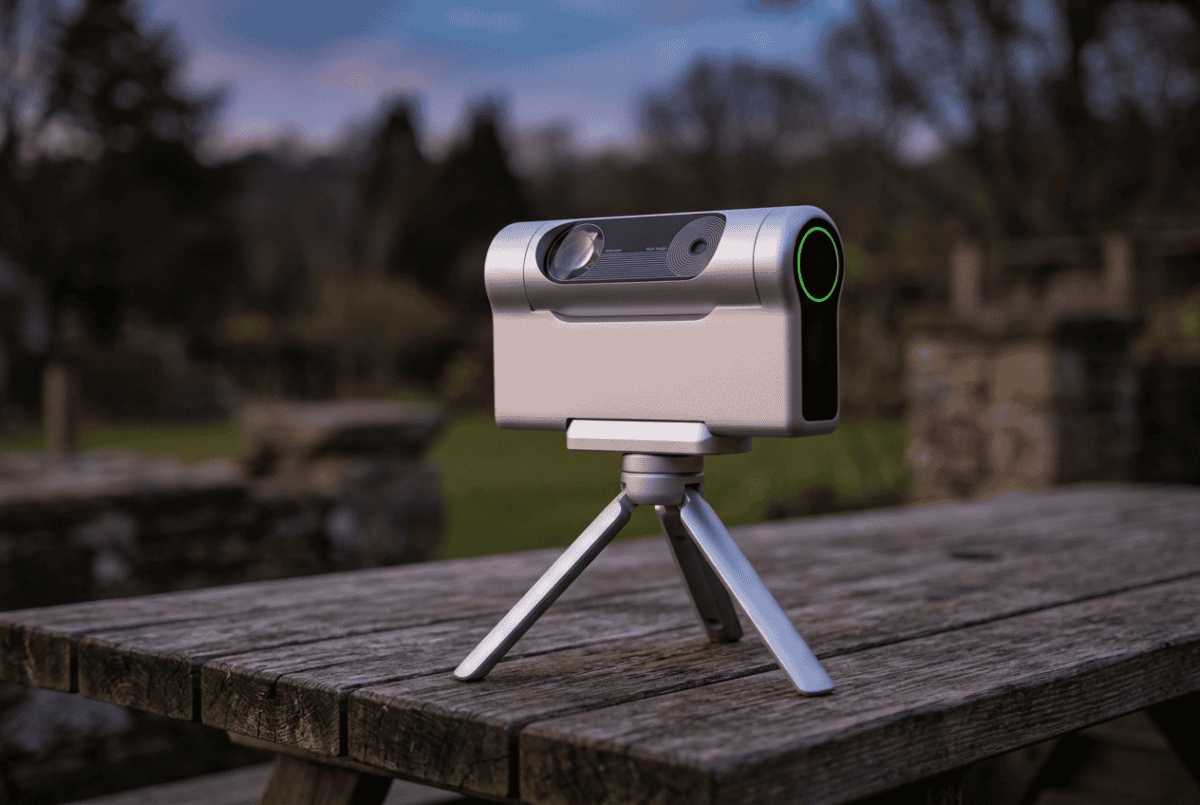
Verdict: If you care most about capturing big, sprawling nebulae and traveling light, the DWARF 3 (~$599) is the enthusiast’s pick.
The DWARF 3 takes a different design philosophy than the Seestars. Its 35mm, 150mm optic paired with a larger ~8MP Sony IMX678 sensor produces a genuinely wide field of view — the widest practical framing in this group — which is exactly what you want for the large emission nebulae that overflow a Seestar’s frame. It also supports an equatorial (EQ) mode that allows longer sub-exposures (up to around 60 seconds), which serious imagers appreciate for pulling out faint detail. It folds down into a small, flat brick that slips into a bag, making it the most travel-friendly scope here. The app is powerful, though it has a slightly steeper learning curve than the Seestar’s.
Pros:
- Widest field of view — the best framing for large nebulae and wide star fields.
- Larger, higher-resolution sensor than the Seestars.
- EQ mode enables longer exposures for deeper results.
- Superb portability — genuinely pocketable for a telescope.
- Dual-band filter handles light pollution well.
Cons:
- No tripod in some bundles — check what you are buying.
- App and setup are a step more involved than the Seestar’s plug-and-play flow.
- Short focal length makes the Moon small in frame; it is a wide-field specialist, not a lunar scope.
- Poor at planets, like the rest.
Who it’s for: The hands-on hobbyist who wants the widest, most detailed deep-sky frames and will happily spend a few nights learning the app to get them.
Unistellar eQuinox 2 — Best premium (city deep-sky, money no object)
➤ Check today’s price: Unistellar eQuinox 2 at High Point Scientific
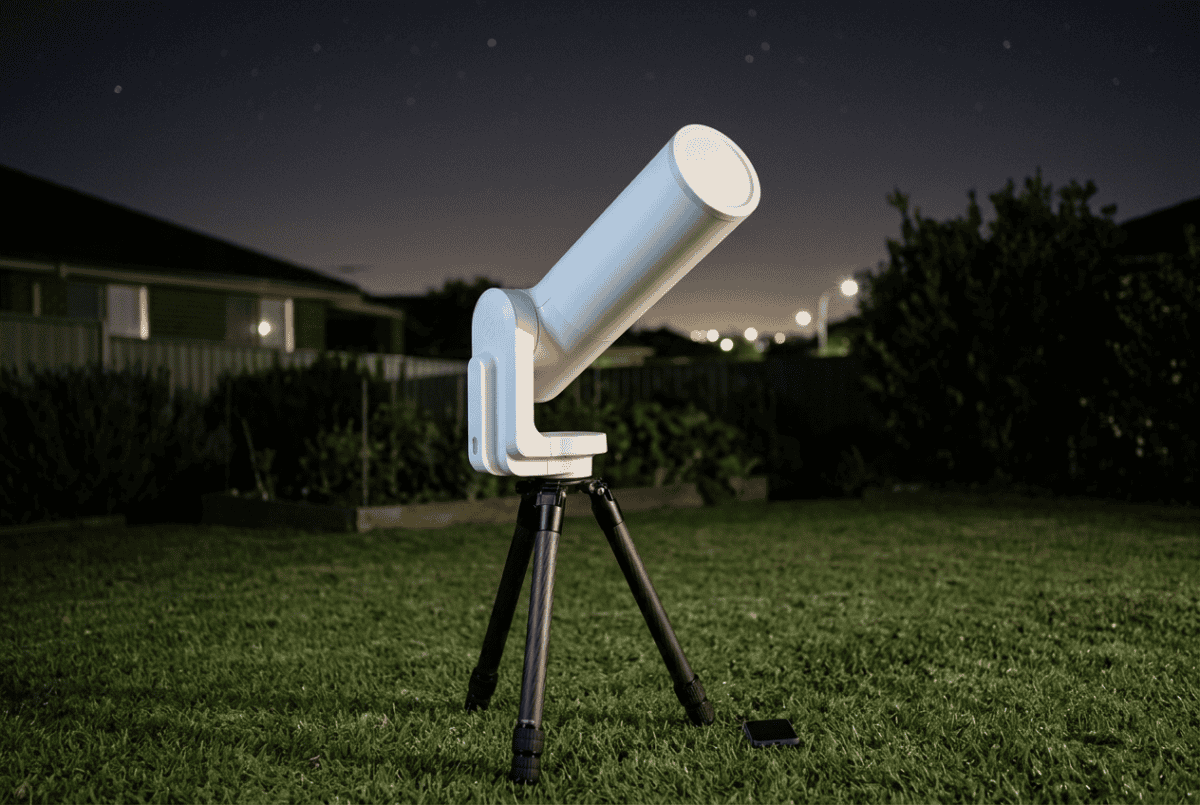
Verdict: The Unistellar eQuinox 2 (~$2,499, frequently discounted) buys you a bigger mirror, effortless polish, and the strongest live-view experience under bad skies — but not five times the usefulness of a Seestar.
This is where you pay for aperture and refinement. The eQuinox 2 is a 114mm reflector — dramatically more light-gathering than the little refractors above — wrapped in Unistellar’s slick, near-thoughtless app and their “Deep Dark Technology” that does an excellent job punching through urban light pollution in near real time. It is the scope that most feels like a finished consumer appliance, and it can chase fainter galaxies than the small scopes. Unistellar also leans into citizen-science campaigns (asteroid occultations, exoplanet transits) if that appeals to you.
Pros:
- Much larger 114mm aperture reaches fainter targets.
- The most effortless, polished experience of the group.
- Strong real-time light-pollution processing for city observers.
- Citizen-science participation built in.
Cons:
- Expensive — roughly 5x the Seestar S50 for nowhere near 5x the practical benefit.
- No eyepiece (the pricier Odyssey Pro adds a virtual OLED eyepiece; this one does not).
- Bulkier and heavier than the pocket scopes.
- Still poor at planets.
Who it’s for: The buyer for whom price is not the deciding factor, who wants the best-polished city deep-sky machine and the deepest reach — and who understands they are paying a premium for refinement, not a revolution.
Vaonis Vespera II — Best design and image polish
➤ Check today’s price: Vaonis Vespera II on Amazon
Verdict: The Vaonis Vespera II (~$1,590) is the beautiful one — pay for the industrial design and clean processing pipeline if aesthetics and image polish matter to you.
Vaonis builds the most design-forward scopes in the category. The Vespera II is a 50mm apo pairing with a larger ~8MP Sony IMX585 sensor, and its images come out clean and well-processed with a mosaic mode for wide fields. It looks like sculpture and stows into a tidy pod. Note that Vaonis has since announced newer Vespera III and Vespera Pro 2 models, so shop carefully and confirm which generation you are actually buying. Honestly, on pure price-to-performance it is hard to justify over a Seestar or DWARF 3 — you are paying for polish and looks.
Pros:
- Gorgeous industrial design and build quality.
- Clean, well-tuned image processing and mosaic mode.
- Larger sensor than the Seestars.
Cons:
- Premium price for optics comparable to sub-$600 scopes.
- Newer Vespera models now exist — easy to buy a soon-to-be-superseded unit.
- Poor at planets, same as every scope here.
Who it’s for: The design-conscious buyer who wants an object as pleasing to own as it is to use, and does not mind paying for it.
Are smart telescopes worth it?
For the right person, yes — emphatically. But you have to buy one for what it actually is. Let me give you the engineer’s honest accounting, because the marketing photos won’t.
Here is what a smart telescope is worth it for: pulling real, colorful deep-sky images out of a compromised sky with almost no skill or setup. This is the part that changed my nights in York. Under my Bortle 5–6 suburban skies, a traditional telescope shows most nebulae as faint gray ghosts, if at all — the light pollution simply washes them out for the human eye. A smart scope’s dual-band filter and live stacking cut through that and hand me the color and structure my eyes will never see from home. If you live in a city or suburb and you have ever felt cheated by what your telescope shows you, that is the exact problem these solve. That alone is worth the money for a lot of people.
Now here is what they are not worth it for, and where honest reviews go quiet:
- Planets. Do not buy a smart telescope to see Jupiter’s belts or Saturn’s rings up close. These are wide-field, short-focal-length deep-sky imagers; planets come out as tiny, unimpressive blobs. A modest traditional scope with a good eyepiece crushes any of these on planets. This is the single most common disappointment I hear about.
- The eyepiece experience. There is something irreplaceable about photons that left a star thousands of years ago landing directly on your retina. A smart scope shows you a screen. It is a wonderful screen, but it is a screen. If the romance of looking through a telescope is why you are here, no smart scope fully delivers that.
- Serious astrophotography ceilings. These are fantastic for their size, but a dedicated camera-and-mount rig will out-resolve them. Smart scopes trade ultimate quality for radical convenience.
One more honest note on light pollution, since it is my hobby horse: between the two value picks, the Seestar and the DWARF 3 are roughly a tie at handling suburban skies — both use dual-band filters and both do well. And the premium Unistellar and Vaonis scopes buy you image quality and polish, not a fundamentally different capability. Do not let anyone convince you the $2,899 scope “sees through” light pollution in a way the cheaper one cannot; it mostly sees deeper and cleaner, which is a different thing.
Frequently asked questions
What is a smart telescope?
A smart telescope is a fully automated, app-controlled telescope that photographs the night sky instead of offering an eyepiece to look through. You tap a target in its phone app, and the scope points itself, tracks the object, and live-stacks many short exposures into a bright color image on your screen — no star charts, alignment, or astronomy experience needed. It is best thought of as an imaging robot for deep-sky objects like nebulae and galaxies.
Are smart telescopes worth it?
Yes, if you want easy, colorful deep-sky images with minimal effort — especially from a light-polluted city or suburb, where they dramatically outperform what a traditional telescope shows the eye. They are not worth it if your main goal is viewing planets up close or experiencing the classic look-through-the-eyepiece feeling, since they do neither. For most beginners chasing nebulae and galaxies, a Seestar-class model is well worth the money.
Are smart telescopes good for seeing planets?
No — planets are the weak spot of every smart telescope. They are wide-field, short-focal-length deep-sky imagers, so Jupiter, Saturn, and Mars appear as small, low-detail blobs. If planets are your priority, a conventional telescope with a decent eyepiece will show far more. Smart scopes shine on nebulae, galaxies, and star clusters, and most also do a nice job on the Moon.
Which smart telescope is best for beginners?
The ZWO Seestar S50 Pro (~$899) is the best smart telescope for beginners. It has the most polished app, the fastest and most foolproof automation, an included tripod, and strong Moon and deep-sky performance, so a first-timer can capture a color galaxy within minutes. If your budget is tighter, the ~$299 Seestar S30 offers the same excellent app in a smaller, wider package.
Do smart telescopes work in light pollution?
Yes — handling light pollution is one of their biggest strengths. Models like the Seestar S50, Seestar S30, and DWARF 3 use dual-band filters plus live stacking to cut through suburban and city skyglow and reveal color and structure the naked eye cannot see. Premium scopes from Unistellar and Vaonis process light pollution even more cleanly. From my own Bortle 5–6 backyard, a smart telescope is the difference between a gray smudge and a genuinely colorful nebula.
The bottom line
Three takeaways to leave you with:
- For most people, buy the Seestar S50. It is the best blend of automation, image quality, included accessories, and price — the safest recommendation in the category.
- Match the scope to the job. Go S30 to save money, DWARF 3 for the widest deep-sky frames and travel, and Unistellar or Vaonis only if polish and premium reach genuinely matter more to you than value.
- Know the limits. Smart telescopes are deep-sky imaging machines, not planet scopes, and they will never replace the eyepiece. Buy one for what it is — a light-pollution-beating window on nebulae and galaxies — and you will love it.
If you want to go deeper, here at Telescope School we have a few guides that pair naturally with this one: our full ZWO Seestar S50 review, a longer honest take in Are smart telescopes worth it?, and — since so many of you observe from town like I do — The best telescopes for urban stargazers. Clear skies, and don’t be afraid to start small. The best telescope is the one you actually take outside.
Affiliate links for the scopes above: ZWO Seestar S50 Pro · ZWO Seestar S30 Pro · DWARF 3 · Unistellar eQuinox 2 · Vaonis Vespera II
I evaluate smart telescopes on real performance, not marketing, so this ranking reflects what actually earns its price.
These May Help Too...
Can You Use a Telescope Through a Window? (And Why You Should Not)
Using a telescope through a window ruins the view: bad glass, heat currents and reflections. Here is what actually happens, and what to do instead.
Telescope will not come to focus? The cause is almost always spacing, not optics. Work out whether you ran out racking in or out, then fix that end.